
Physical Worship: Water and Wine
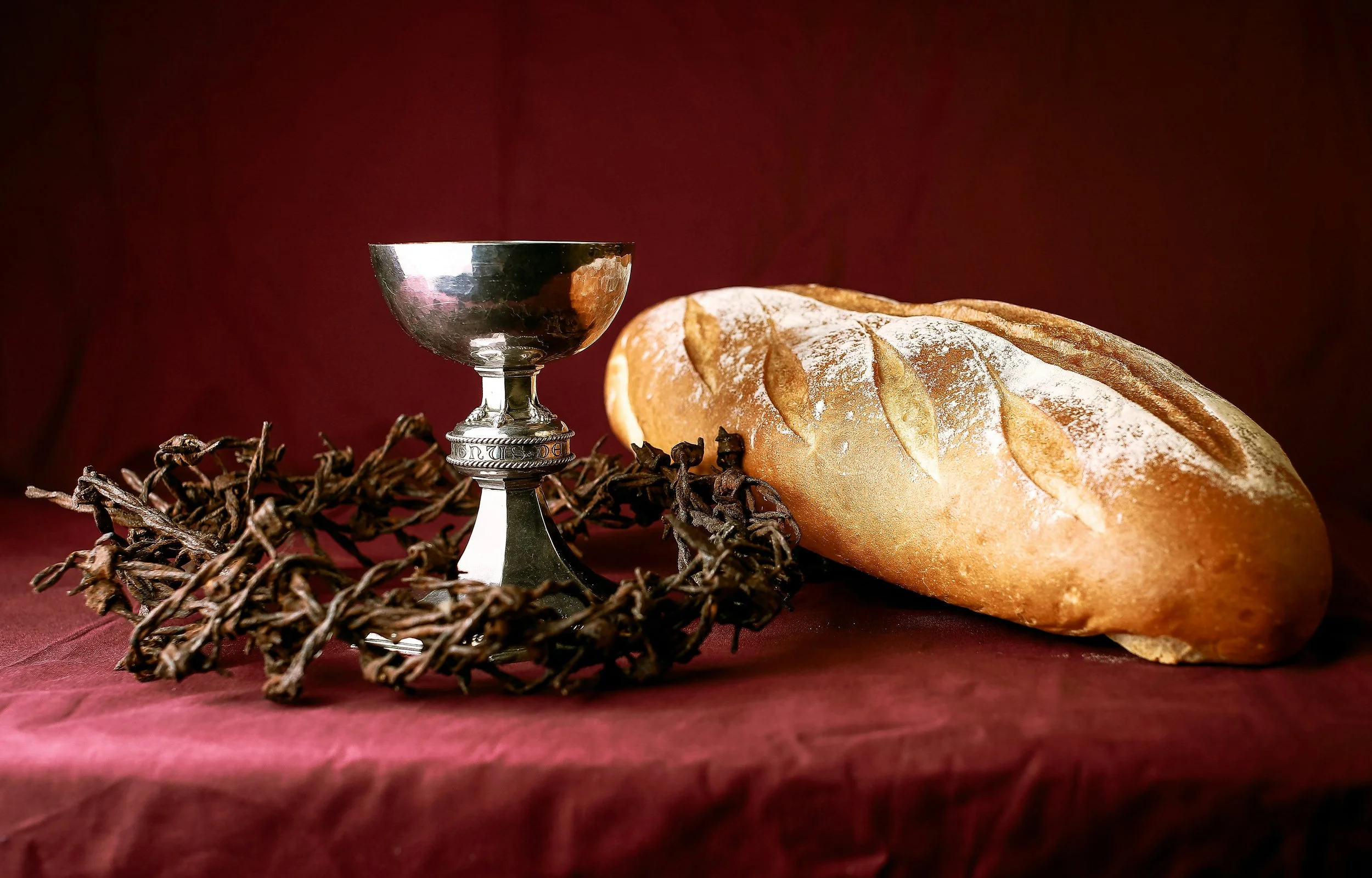
Communion elements of wine and bread on a red cloth with crown of thorns
Photo by James Coleman on Unsplash
In our worship services, you may notice that there isn't much to look at. There are no elaborate stain-glass pictures of Jesus. There isn't much choreography to my movements. There aren't a lot of mysterious symbols and rites. But should there be? After all, is that not what many people are looking for these days? A return to older, embodied, dare I say, *enchanted* ways of doing things?
God knows this, for He knows our frame, which is why He has given us those things in two pictures of the Word that are right in front of you: The Lord's Supper and Baptism. Wonderfully, these aren't symbols that you just sit there and watch. You didn't not come here to watch *me* worship with my body while you spectate. These are acts of worship that you *equally* participate in with your senses. These acts of worship are loaded with meaning that fully informed by the gospel. Yet these elements contain mystery to them, too. Not because they are unexplained. But because it takes a lifetime to fully comprehend what these elements do in your life.
The mystery that is there is that these elements aren't just show pieces to point you back to the Bible. These also, through the Word preached and by faith believed, are a means of grace for your soul. Your soul is grown by baptism and the Lord's Supper when they are taken alongside the preached word faithfully believed.
We are in the midst of a series on worship, and so far we have seen that worship is for God directed by God's Word, not only in the elements that we use for worship but even the content of those elements. Today, we will press in to understand how we use our bodies, as well as our minds, in the worship of God and the tangible benefit that these elements of Lord's Supper and Baptism have in our lives as well. By the way, this is a great time to invite people to Church during this series as they can have a chance to get in on the ground floor to understand what we are doing here.
God has given us two pictures of the gospel
In order to understand how important this is, we actually have to go all the way back to the Old Testament to the second commandment. If you remember your Sunday School classes, the second commandment is "You shall make no graven images." The people of God were not to make any image of God and try to worship with it. The golden calf was a big sin that God judged. He said to make no image of Him because God is a spirit. He doesn't have a physical form, per se. Yes, since Sinai God came to earth and took on a human nature including a body, but we have famously no physical description of Him on which to base future artwork.
Instead we have been given a physical picture of what Christ has done for you and what He will continue to do for you. And this picture is made up of surprisingly simple elements. God didn't choose saffron and rubies, rare and expensive products. He used things that are found everywhere.
He uses water for baptism, something that covers 70% of the earth. Everywhere that humans are, water is. We simply must live near it. You will always be able to baptize someone, because you only need a little bit, my Baptist friends. He uses fermented grape juice and unleavened bread, something that even lowly slaves in Egypt had access to. These are not elite symbols. These are common, everyday things that all people have access to.
So these are the elements of our physical worship. But what do they mean? Are we meant to take these elements and read into them our own personal thoughts? Are they meant to spark conversations to take on meaning larger than themselves and individualized to each member?
No. It is so much better than that.
There is actually a defined meaning for each of these elements which brings the global and historical church together. Paul talks about this regarding baptism in Ephesians 4:4-6 "There is one body and one Spirit—just as you were called to the one hope that belongs to your call— one Lord, one faith, one baptism, one God and Father of all, who is over all and through all and in all." He mentions this in regards to the Lord's Supper in 1 Corinthians 10:17 "Because there is one bread, we who are many are one body, for we all partake of the one bread." We are not all coming to a visual element with different takeaways as to what this means.
So what *do* these elements mean? As I said earlier, these refer to the gospel, but different aspects of it. Baptism and the Lord's Supper are not interchangeable or repeating themselves.
Baptism Says Only God Cleanses You
Let's start with baptism. Baptism is something that happens once in your life to show the cleansing of sin that the gospel has on a person. Just as dirt is removed from one's hand by washing them, so Christ removes our sin from our souls. To be very clear there is no power in the water itself or in the act of baptizing to cleanse from sin. If it did, then we would just throw water on people rather than talk to them about Jesus.
Baptism is not magic water for us to force God to do something. Rather it God's sign to us of something that God has already promised. We find that promise in Acts 2, where Peter speaks of the New Covenant as a promise to you and to your children, very similar language to the covenant made with Abraham. This isn't saying that every child of a Christian is automatically going to heaven (that wasn't the case with Abraham's children either), yet Abraham put the sign of God's promise on his whole family and we are called to do the same. We are applying a seal to each person that we baptize, infant or adult, that says, "You are part of God's church; Property of God. He has set you apart. You have been given the gift to be among God's people hearing God's Word, a privilege that not everyone has, and a privilege that is going to have an effect on you. It will either be to a soft and contrite heart that repents and puts their faith in Jesus. Or it will be a hard heart that refuses to surrender to Jesus." This isn't losing salvation. It is demonstrating that one never possessed it. We are no more sure of the future conversion of a baby than the current conversion of an adult. Only time will tell, but in the Presbyterian church (as well as many others), we find is the most consistent practice with the Old AND New Testaments to apply that sign to babies of believers as well.
Now baptism is only done once. If God has chosen you for salvation, and you have been baptized, then that sign and seal is on you. No need to put a second seal on there. Your heart already has, "Bought by God" written on it. But the gospel isn't just a one time decision for Christ never to be thought about again or has no effect on daily life.
The Lord Supper Says Only Jesus Can Sustain You
The Lord's Supper, by contrast, is repeated throughout one's life. Jesus isn't here to just wash you clean and send you on your way. He is here to walk with you, commune with you throughout your life. 1 Corinthians 10 calls this supper a "cup of blessing" and in a very real spiritual way it does bless. And what we see in the Lord's Supper isn't Jesus giving you something else to help you along the way. He gives you Himself. We don't hold out the bread saying, "This is Christ's wise teachings that you need to take into your heart" or the cup saying, "This is the new covenant based on Christ's announcement." No, we say, this is Christ's body broken for you, this is Christ's blood spilled for you, you are consuming as it were, Christ Himself. What other ultimate thing could Jesus offer to you? He doesn't offer you talking points, He offers you Himself.
Now, of course, we don't go beyond what Christ said that this was. We don't say that this is the literal body and blood of Christ that you can consume and get power from. That is back to making this magic food that forces God to do something. We can't force God. This is a sign from God as to what He is doing in your life. If it is consumed without faith, then all you get is a snack. There is no power in this supper alone.
Both Baptism and the Supper gain their blessing through the Word of God that is given with them. If I just walk out into the street with our bowl of water, wordlessly washing people's heads, that is not a real baptism. In a similar way, if I take the left over communion elements and hand them out to people wordlessly no one's faith is going to grow.
These elements need to be explained. They need to be understood. They need God’s Word.
This is how we worship with our mind and body.
Finally we don’t just bodily worship here, it in our obedience throughout the week. Empowered by the remembrance of who you are as signified in baptism and the empowerment of the Spirit of Christ as shown in the Supper.