
Reformation: The Lord’s Supper
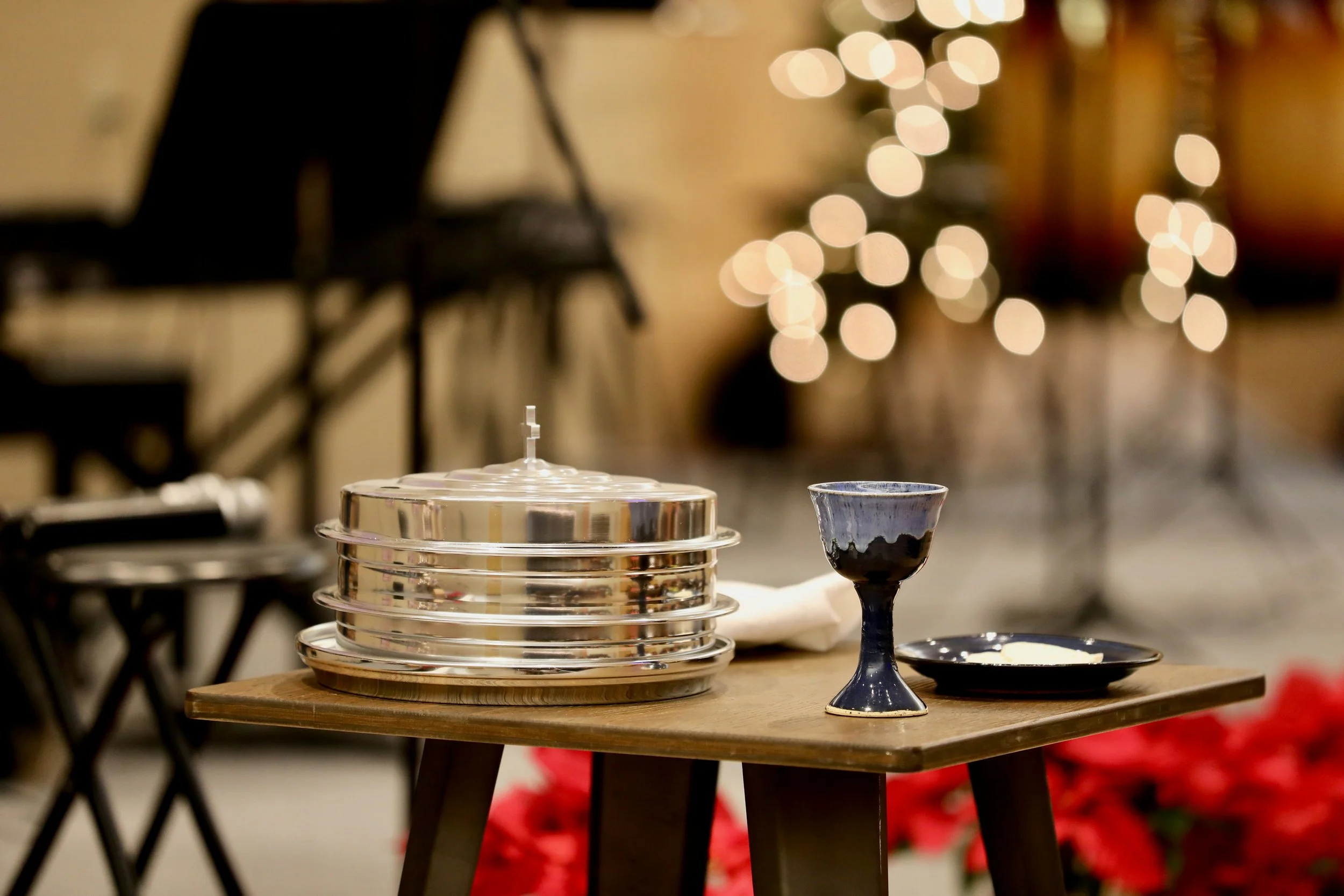
Photo by Jainath Ponnala on Unsplash
What follows is an automatically generated transcript with Apple Podcast's AI. To be sure of what I said, you'll need to listen to the audio.
And as you are being seated, if you would please turn with me in your copies of God's Word to 1st Corinthians chapter 11. 1st Corinthians chapter 11, if you're following along in the Pew Bible, black volume that's in front of you, that's on page 1139.
1139, and we're taking a little detour from our march through the Book of Genesis as we get to remember and celebrate what the Lord has done through the servant Martin Luther on Reformation Sunday. Now we can tend to think that the Reformation, and indeed we'd be right to think so, that a big part of that was about recovery of the doctrine of justification by faith alone. It's a doctrine that did not disappear. It's a doctrine that was not invented by Martin Luther, but was one that became less and less emphasized, less and less remembered accurately as we find it in his word. And so to recover this idea that it is not by your works that you're saved, but the free grace of Jesus that brings you in to heaven.
Because that's such a foundational doctrine, it can be easy to miss some of the other comforts that have come out of the Reformation.
The recapturing of these other doctrines. And since this is cohere d so well with our celebration of the Lord's Supper this morning, I thought I would take a moment of Sunday to take a look at 1 Corinthians chapter 11 and see how this meal that we're about to partake in is such a blessing to us.
But one that we have to prepare for.
Indeed, that's what's going to be our main point this morning, is that communion is a blessing for our souls.
And it's a blessing that we must prepare for.
So, let's see how we do this out of 1 Corinthians 11, verses 20 through 29.
Since we're kind of jumping in right in the middle here, I want to take just a moment to set up our context. 1 Corinthians is the first letter that Paul sends to the church at Corinth. This was a motley crew. There was a lot going on at Corinth, because there was a lot going on in the city of Corinth. It was a very worldly place, full of a lot of assumptions of how things were to be done with money, sexuality, and such that things were awfully confused within the church, such that we don't have the opportunity to look back and say, well, I would like for the church to go back to the way it was in the New Testament times. Well, it looks a lot like it does in modern times, because people don't change, and Christians have struggled with a lot of the same things back then as they do today. Here in this particular issue in chapter 11, Paul, among his many corrections he offers the Corinthians, offers correction as to how they're approaching the Lord's Supper. Here in the church, this would have been a part of a larger feast, and what we had is people were very selfish and unmindful towards each other. The rich pushing their way up to the front of the line to clear through the Lord's Supper and not leaving enough for the poor, who are having to go away hungry, and the rich, who have plenty of food at home, are going away gluttonous. And it's here in this context that Paul is revisiting 1 Corinthians 11 and is taking a look at the Lord's Supper.
So with this in mind, let's start in verse 20.
Listen carefully, because this is God's word.
In light of the situation we have just said, verse 20, when you come together, it is not the Lord's Supper that you eat. For in eating, each one goes ahead with his own meal.
One goes hungry, another gets drunk.
What?
Do you not have houses to eat and drink in?
Or do you despise the Church of God and humiliate those who have nothing?
What shall I say to you? Shall I commend you in this?
No, I will not. For I received from the Lord what I also deliver to you, that the Lord Jesus on the night when he was betrayed took bread.
And when he had given thanks, he broke it and said, This is my body, which is for you.
Do this in remembrance of me.
In the same way also he took the cup after supper, saying, This cup is the new covenant in my blood. Do this as often as you drink it in remembrance of me.
For as often as you eat this bread and drink the cup, you proclaim the Lord's death until he comes.
Whoever, therefore, eats the bread or drinks the cup of the Lord in an unworthy manner will be guilty concerning the body and blood of the Lord. Let a person examine himself then, and so eat of the bread and drink of the cup, for anyone who eats and drinks without discerning the body eats and drinks judgment on himself.
This is the word of the Lord.
Thanks be to God for his word.
Let's go to our God and ask his blessing on our text today.
Oh, Heavenly Father, we do thank you for this gift that you have given to us in your son and then this picture that you have given to us to remember and proclaim his death.
Lord, help us to understand this mystery.
Open our eyes to see your gospel, both in the things that we hear, even in the things that we see, even in the things that we taste this morning.
Help us to have a fresh grasp of the sacrifice that you have made for us today.
And it's in Jesus' name I ask these things.
Amen.
Well, as I began with, the doctrine of justification, important as that is, is not the only issue that was fought over. And in here, when we get to the Lord's Supper, we are encountering something of a mystery here. This is why there has been a lot of confusion as to exactly what this means.
What is it that we are doing?
One of the things that we want to take a look at as we'll go through here, is we'll take a look at a couple of common misunderstandings, how the supper was done and why it's important for us to see this way. The first thing that I want us to recognize and come away with, is that this is not a magic bread and juice that we are serving here this morning. In other words, there is not anything powerful in and of itself to make you grow as a Christian. If that were the case, if we could give faith to other people by giving special bread, well, then that's what we would do. We would line up and we would hand out communion bread that has been blessed by pastors and hope that this produces faith in people.
But that's not what this Lord's Supper is.
It's not magic bread.
It's not magic juice.
It feeds your faith, but it does not form it.
What I mean by that, it does not create faith.
Where, how, by what means, does God use to produce faith in us?
Faith comes by hearing. And hearing by what?
The Word of God. In every part of our worship, the Word of God is central.
This is why even in Protestant architecture, we have set up the worship space to be the way it is. What is quite literally front and center and elevated.
It's not supposed to be me.
I'm representing here the Word of God. Because that's where the power is. That's what builds our faith.
What this is, is a visual picture of that word.
This is the only authorized image that Jesus has given to us to say, here is the gospel visualized. But unless we explain what this means, if we were just to set up a table and I were to mime my way through the Lord's Supper and not say anything, no one would know what this means. They would just say, he's getting up, he's tearing apart some bread, he's pouring out some grape juice, and he's serving it out to people to eat it.
And if you have no context for what's happening, then you'll have no idea what this is talking about.
This is why God does not speak to us only in this image. He doesn't do so in vagary.
He gives us his word.
This is why even when Jesus is instituting it, he is explaining as he goes along, Jesus is not silent as he's tearing apart the bread. Remember, this would have been a part of the Passover Supper. So for him to begin speaking in this moment and say the things that he's saying was breaking protocol, was giving a new meaning to this meal. So the word is central to understand this. But it's not just intellectually understanding this. There are many people who have studied Reformation history, professors of theology, who can explain these things way better than I can. But do so from a position of saying that this is an ancient rite that gives comfort to some people but actually has no basis in reality. Does the supper benefit them?
They understand the word intellectually.
They know the meaning of what's happening here intellectually.
But they have no faith.
They have no connection point with God.
And without that, this again is an empty meal.
It's just bread and grape juice.
So there's nothing inherent in here to produce faith.
The word does that.
There's nothing in here that connects you with God on its own.
It's faith, and faith produced by the Holy Spirit.
These are necessary to do these things.
Now we can come away from this and say it's like, okay, all right, it's not magic bread.
So why do we practice this? What's the point?
While it's not magic, it's also not nothing.
It's not just a symbol. It's not just a prompt to remind ourselves about what Jesus is doing. Because we find that out earlier on in 1st Corinthians chapter 10. And 1st Corinthians chapter 10 in verse 16, it has a very interesting way of phrasing and talking about the Lord's Supper.
If you're there, it's just a page back, so go ahead and turn there, 1st Corinthians chapter 10 and verse 16.
It says, the cup of blessing that we bless, is it not a participation in the blood of Christ? The bread that we break, is it not a participation in the body of Christ?
Because there is one bread, we who are many are one body, for we all partake of the one bread.
You see what he's doing here?
That this is a cup of blessing that he calls this.
And this word participation is a translation of the word koinonia, which we often translate as communion. We're having table fellowship with our Savior. And this is why later on in the chapter, he tells them, don't go to these other places of worship where you have meals with demons.
We don't participate with them.
We don't have communion with them. We have communion with our Savior. And it is a blessing to do so.
Not just, it's a blessing to prompt us to remind ourselves about the Gospel, but it in itself is an opportunity through faith, because of the Word, we're able to experience this blessing that we have with Christ.
Now, because this is such a mystery, there have been so many ways that people have tried to conceptualize that in Church history.
The Roman Catholic Church, what Martin Luther was dealing with, they thought that they were communing with Christ by very literally eating the literal body and blood of Christ. A process called transubstantiation, where the priest is calling Jesus out of heaven to be broken again and to be consumed by us physically. An over literal reading of this is my body. He also said that he is a vine and he is a door.
We don't take those quite so literally.
But what's the problem with that?
Well, one, this is asking us to take a contradiction here. This is bread, still tastes like bread, but we're supposed to say, but this is actually flesh. While we can argue on logical grounds, the real problem here is in what we're asking of Jesus. For his body to be broken again, for his blood to be poured out again, is to imply that the sacrifice he put on the cross was not enough. In Hebrews, we are told that this is a once-for-all sacrifice, and then Jesus sits down. We don't call him out of his chair every week to do more work.
The work is done. That's what's such the comfort about the Doctor of Justification. It's a one-time work.
With Jesus' sacrifice, it's over.
You put your faith in him, your sins are gone. But if we were to say, no, he has to be come back out of heaven again.
He has to be sacrificed again. We have to wonder, well, is it enough? Will it ever be enough for us to say, no, no, this is not calling God out of heaven to break him on our table again.
But this is a picture pointing back to the time in which Jesus was broken and his blood was poured out for the forgiveness of our sin.
And that's what we bless.
That's why this is a blessing for us.
But nor is it the other way. There were some trying to get as far away from that as possible. We'll say, no, no, no, no, this is just bread. This is just grape juice.
There is absolutely nothing going on here other than just what's in our head.
This is a reminder of this, and that's all that it is.
I don't think we can say that from 1 Corinthians 10.
It says that this is the cup of blessing, not the reminder of a blessing. And this is an opportunity, as it says, as participation with Christ, in some mysterious way, in a spiritual way.
We're communing with Him.
Now here at this point, the Lutherans want to make fun of us, and would say, it's like, well, He's physically present here. Something that they call real presence, which has some problems how Jesus is bodily able to be in multiple places at one time.
It's fraying His humanity.
But this betrays an understanding of saying, well, no, it's a spiritual presence here that makes it no less real.
Communing with Christ by faith is something really happening. No, we can't get out our scientific dials and watch the needles move around. A very materialistic way of looking at the world.
It's to say, no, Christ is spiritually present.
Not by Him coming down to us, but by Him bringing us up to Him, to have communion with Him.
Now, if that's what's really going on, and it is, how on earth do we get ready for something like that?
If we were going to have a face-to-face communion with some world leaders of our time, we would take a moment to kind of pull ourselves together. Try to figure out how to comport ourselves in the presence of greatness.
I went through this when I got to my first date, which happened to be with that young lady over there.
I had never been on a date before. I was 25, and all God's people said were not surprised.
I didn't have to laugh that hard.
But I had no idea how to comport myself. So I spent time preparing, and I still have the picture of an outline of a fictitious conversation that I was going to have with her, and how I was going to go from point one to point two so I wouldn't get lost and look unprepared. Unfortunately, I did not share the script with her, so by the time we got to point number one, we were always very off script.
So I was trying to prepare, and I give myself some effort for that. But a first date is one thing.
How do we prepare for a spiritual face-to-face with Christ? How do we get the most out of this that Jesus does for us?
Let me start by saying why do we prepare, and give you a couple of reasons as to why we are, how and why we're not doing this.
One, there are so many times, and this is something I've suffered with as a child, and don't want the same thing to be for you.
We talk about coming to the table unworthily. This does not mean that by our preparation, by having read our Bibles, by having prayed, by having avoided sin for this week, that we are worthy to come to the table. If that's what you're thinking, then you're suffering from another sin, and that's pride. That we could ever earn a spot at the king of the universe's table, that is only accomplished by grace through the finished work of Christ, which this celebrates. What a backwards way of thinking, that we come to a table meant to show for us that Christ has sacrificed himself for our sins, and we try to clean up ourselves on the way, forgetting this is a gospel. So never think as you're approaching this, saying, it's like, well, I've messed up this week, so I can't come here.
No.
We're made worthy by Christ.
We're made worthy by His work in our heart, that will, yes, show itself in good works.
But it's something that comes from Him and Him alone. This is why we don't prepare.
We've been made worthy by Christ.
But I also want to say why we do prepare.
In that preparing our hearts to come to this is not an automatic process.
This is not something where you just roll in and here we are.
But there is something that we can do.
There are some things to keep in mind.
And that's why I had us print up Question 171 from the Larger Catechism.
This would be something you can take home with you, take a look at, keep in mind for next month. Because it gives you an outline exactly how it is that we prepare.
All of these are being drawn from the scriptures themselves, and I can give you a list of what proof texts these things come from. But I wanted to go down kind of as an outline as we move into our application part of our message. Applying ourselves this command to examine ourselves, before we come to the table.
What does that look like?
Number one, when we examine ourselves, we are conscious of our sins. We're conscious of our sins. The point of doing this is not to just walk away from our time of reflection saying, well, I'm just the worst, the scum of the earth. That's not the point.
This isn't an exercise in self-flagellation, whipping ourselves so we feel appropriately bad enough.
The point of looking at our sins is to recognize why it is we need a table. Why it is that Christ had to come and die.
We can't get rid of these things on our own.
We need Jesus.
But by the same token, He doesn't just forgive, but He also cleanses and begins the lifelong process of having us hate our sin more and loving Jesus more. And once a month, as we come to Communion, it's a great opportunity to check in and see, how is this going?
When we're mindful of the things that we know we deal with, we have the opportunity to say, what steps am I taking to repent of this?
Or am I just hoping I'll just get better?
If you deal with anger and bitterness, are you memorizing Scripture that addresses those things? Do you have a structure of accountability to deal with that? If not, then that's a wonderful opportunity, a reminder to say, no, Jesus died to free you from this, not to give you a license to do it more. And he's given you his Holy Spirit so that you don't have to do these things over and over.
No one's ever going to be perfect.
No one is ever going to be every single month is one straight line straight up.
There's going to be setbacks. But having an opportunity to remind yourself, where am I weak?
Where does Jesus need to do more work? Gives you a wonderful opportunity once a month as we come to the table.
This is why we like to tell you a week in advance it's coming.
To check in, do some inventory of the soul, and see.
Here in 1 Corinthians 11, clearly we have some selfishness going on.
Would they would have examined themselves and say it's like where is this selfishness coming from?
How do I deal with this?
But it's not just a reminder or thinking about our sins. There's a second thing that we can think about to prepare.
Is where is your knowledge, faith, and repentance? This isn't just an opportunity to see how we're advancing morally. How are you advancing in what you know? Are you diving into the scriptures to learn more about your Savior? Do you know even just a little bit more about your Savior this month than you did last month? We're not able to find the comfort that God would give to us if we don't know what's there. We won't get to rejoice in the promises that Jesus offers to us if we don't know what they are. And we have an opportunity once a month to do an inventory.
What do I know?
How am I growing in my trust of Jesus?
How am I growing in my repentance from my sin?
And I love the next thing that they mention, instead of just the measure of the knowledge, faith, and repentance.
But the next thing is, is how is your love of God and neighbor?
This is a great reminder to those of us that would like to intellectualize our faith. That equate spiritual maturity with the amount of systematic theology textbooks you've read.
Because those are not the same.
You can know an awful lot and be very immature in Jesus. What is this knowledge of Jesus doing in your heart? Is it making a difference in your love for God and then your love for neighbor? If you don't love your neighbor, then you don't love your God.
How is this knowledge shaping you?
If it's just growing a lot more of what's in your head, Paul warns us that knowledge is just puffing up if that's all it's doing.
But your growth in love shows that it's having a real effect, that that is its purpose, a love for God and a love for neighbor.
And finally, Westminster pastors really touch on something here at the end.
It says, love to God and brethren, charity to all men, forgiving those that have done them wrong. That's really hard. It's so easy to love neighbor that does well for you. It's easy to love those who are like you and who like you. But the real test of whether or not you love your neighbor is, can you forgive your neighbor when they have done you wrong? Not just when you feel offended, but when they have done actual sin against you, when they have offended God and how they have treated you.
Are you able to forgive?
Are you growing in that ability?
Remember, these are not things that you are building up in yourself.
These are not things that if you just white-knuckle it hard enough, eventually you'll be able to forgive people.
This comes from spending time with Jesus.
This comes by appropriating the means of grace that he has given to you in word, in prayer, meditation.
Lord's Supper.
These are the opportunities for us to see how is my soul doing under Jesus' renovation?
Am I fighting him with this process?
Am I tying him up with this permitting process as I can?
Oh, no, you can't touch that.
I haven't given you permission to look at that area of my life. You cooperating with this renovation that he's doing, and communion gives you this wonderful opportunity to be reminded.
And then if we see that we're lacking, not to hang our heads and walk away and saying like, well, I guess there's just no hope for me.
But it says here, by renewing the exercise of these graces, if you find yourself lacking, well, it's only been a month since you last checked in, get back on it. Take advantage of the gifts that God is giving to you, including this supper that we are about to receive.
Because it's a blessing for you.
It's a nourishment for your soul. That's how we prepare to take.
But we're only going to take in the next five minutes.
So let me spend just one moment telling you, how do you receive this now?
There is a mixture of recognition of the sacrifice that Jesus has done.
And the victory that we have been set free.
So how is one to emotionally process the Lord's Supper as we're taking it?
Imagine that you have been given a diagnosis.
You are in acute kidney failure.
Both of your kidneys are gone.
And your only hope of survival is that a donor kidney is made available to you. And before you can even wrap your head around what the doctor has just told you, he comforts you by saying, but fear not, a donor has come forward and is offering you their kidney. It's a perfect match.
We're going to go into the operating room right now.
You are not given any time to answer questions, to ask anything. You're suddenly wheeled into the operating room. And the next thing you know, you're awake to the surgeon saying, the operation was a success.
You have a new kidney, you're going to live.
You can see your children grow up.
You can live the life that you truly wanted to live.
It won't be cut short.
And you can imagine the gratitude that floods your soul in this moment and the joy that you are not going to die today of this failed kidney.
And then the doctor looks at you.
And he says, would you like to meet your donor?
They're in the next room.
You walk out the door, you come into the next room, they pull the curtain back, and there, pale and trembling, is your mother.
Now you still feel the joy that your life has been restored.
And you know, looking at her, that it has been her joy to save your life.
But you know what she's going through.
That though it was a joyful process, it was not pain free. And that she has made an enduring sacrifice for you to make this thing possible. And there, in that moment, we can't draw a neat line as to exactly what we're feeling here. There is this mixture of incredible humility, almost a tinge of sadness that this is what it's required, that my body has caused suffering for another.
But also this joy that I am loved and cared for and redeemed, given new life.
I think that's what we're looking at here in the Lord's Supper. The Lord went to the cross with joy, but not without pain, not without sacrifice.
So when we come and we eat and have table fellowship with our Savior, there is a mix of humility, sadness, and yet of great joy as we take of this.
So because of the profound nature of what we have before us, it is well worth the preparation.
And all it is is rehearsing.
Since this is a picture of the Gospel, you have an opportunity to ask, what has the Gospel done for me?
How is this practically working itself out in my life? Jesus died for my sins and rose again to promise me eternal life.
Have I taken it?
Is it making a difference for me? And if not, then this is the opportunity to get serious. This is the opportunity to come back.
This is the opportunity to do business with God.
And to enjoy the freedom that this very meal pictures. So if you're in Christ today, but you know you've been letting some things slide, here's an opportunity to come back, to renew your commitment to Christ.
If you find, you know what? I've always just like known the stuff of the gospel, but it's never really made a real difference in my life.
Well, here's the opportunity.
Put your faith in Him.
Turn away from your sin.
Put your full weight on Him.
All of your eternal expectations put in His hands.
And say, Lord, you are my King. Guide me.
Take me. Transform me.
And I promise you will never be the same again. And that you will be able to take this Supper in full gratitude and love for Christ.
Let's pray.
Heavenly Father, we thank you for this opportunity to come before you, to have communion spiritually face to face. So I ask if there are anyone here who are unsure where they stand with Christ, that today would be the day of salvation, that they would know you and the power of your resurrection. Lord, I pray for those who have been discouraged, that they would be encouraged by what we see here today. For those that are encouraged, that their joy would be strengthened by what we have here today.
Oh, I ask all these things in Jesus' name. Amen.