
The Passing of Blessing
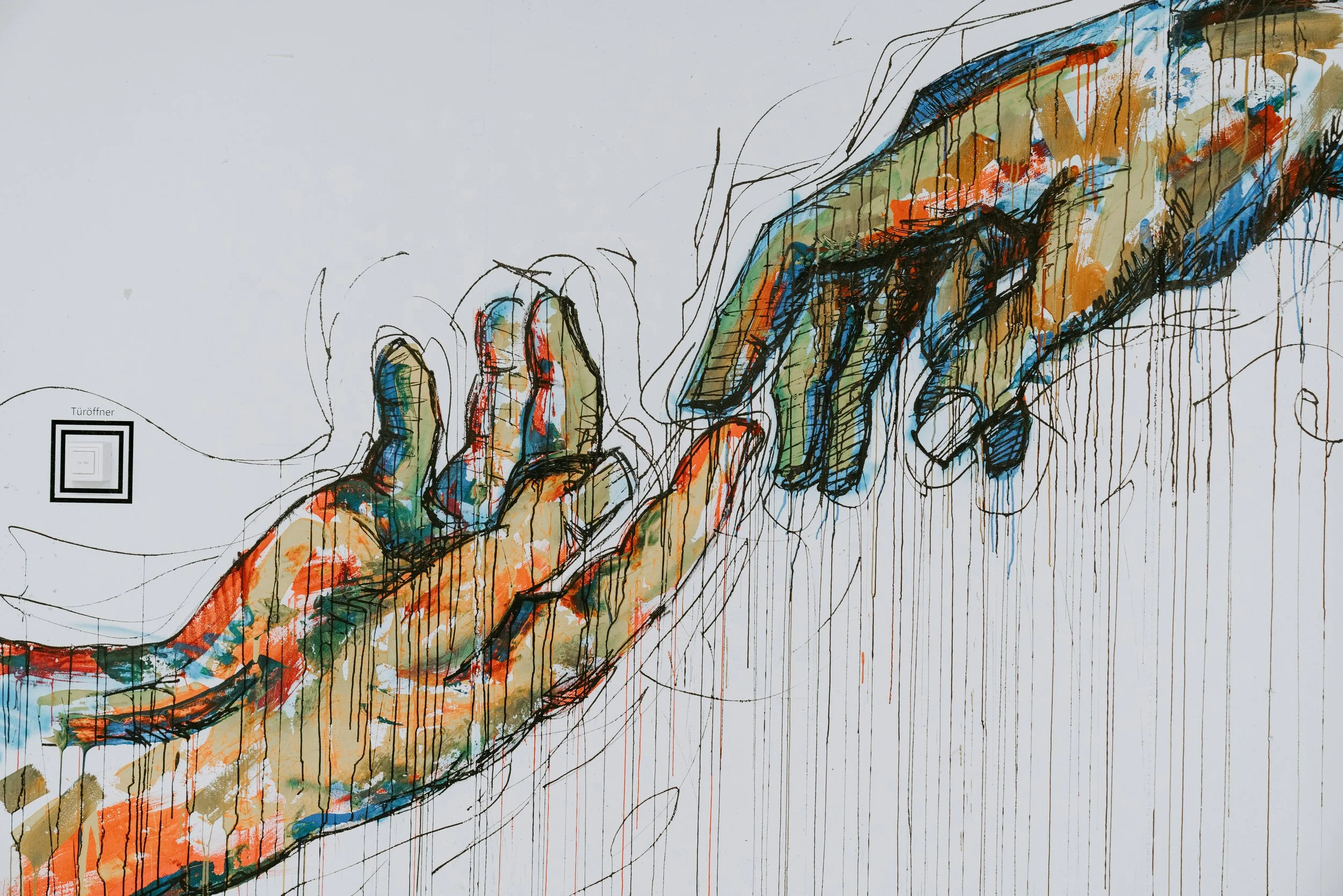
Sketched art of two hands coming together
Photo by Claudio Schwarz on Unsplash
How do you think about God's promises? For Christians, they are the central hope of our lives, because God's promises can't be stopped even by death itself. Because of this, we want to be able to pass on these promises to our children, and a big part of our ability to do that is because of this passage right here. Abraham has been promised that there will be a seed that will bless the nations. Ultimately, that is Christ. The promise is going to outlive Jacob, and we will see the transfer of that blessing here.
Now, our passing on of the blessing looks different. In this passage, the blessing comes ultimately from the Lord but only *through* Jacob. As we will see, the blessing is going to be extended to the rest of the nation of Israel with the tribes forming their own contribution to God's plan. Today, the blessing ultimately comes from Christ but is shared through every Christian that opens their mouth for the kingdom.
We are to remember and pass on God’s promises.
Genesis 47:29-31: Painful reminder of a Promise
The passage opens with a scene that should remind us of the past. When we see Israel asking for an oath with his thigh, we are, of course, reminded of Abraham making his servant do the same in Genesis 24. His focus at that time was a marriageable wife for his son. But in this particular moment, it isn’t about a people but a place, a return of Israel’s body to the land of Promise.
But here, I think we get to see a subtle reminder of another marking of God’s promises. The word translated “thigh” here in this passage is translated “hip” in Genesis 32:31 but it is the same word. This is the part of the body that God touched when He was wrestling with Jacob right before he was about to encounter Esau the next day. Because of this, Jacob limped for the rest of his life. I wonder if it was painful to lift up his hip to allow for this promise? Did he have to lift up the other leg because it was his “good one,” the one God didn’t touch? We remember that this event was also the place where Jacob got his name changed to “Israel,” the name that this land of Canaan will one day be known by.
This is a powerful reminder of how faithful that God has been, and we have something to share in that. God no longer makes a permanent mark on our flesh that we can always see, but He has given to us a sign of His faithfulness: baptism. Baptism is God’s sign of His work of including us in His covenant. If you have put your faith in Christ, you can look back and remember your baptism. The fact that you were baptized means that you have heard the gospel, and at least at one point in your life, associated with a church that cared about your soul. That is a tangible expression of God’s grace to you.
It is the same for infants who are baptized. Even though they aren’t able to express faith, that actually isn’t what the sign is for. It is God’s sign of God’s work on this child, and if a child is baptized then that means that at one point at least, that child’s parents were involved in a church and believed that God wants their child to believe as well and made vows to pass on to their child, as much as they are able, the faith that they have.
If that is your testimony, you can look back to that baptism and say, “God is after me. He has blessed me with a background that not everyone has.” In this way, we are able to join Israel here in this passage. You have had a blessing, and it is time to pass that along.
This is a great privilege and joy as parents to pass on the sign of this promise to our children as Acts 2 tells us it is for.
Genesis 48:1-4: Strength Made Perfect in Weakness
But so often, we feel weak to the task. We come to verses 1 and 2 and find Israel, the wrestler of God, sick in bed needing to summon strength to sit up. He is a physically weak vessel indeed, but he serves El Shaddi, God Almighty. Israel doesn’t have to be physically strong. He is only going to be a conduit of blessing, not its source. God’s grace is strong, yet it can be passed on even in weakness.
And what a blessing he is passing on. Verse 4 gives us this word “multiply” which has been on the heels of the announcement of God’s blessing since Genesis 1. It was said of fish, birds, and Adam and Eve. And though it was said of Eve’s pain in childbearing, it will be relieved in the multiplication of children, as was said of Abraham, Issac, Israel, and even Ishmael. Now, we have see it come to fruition here in 47:27, and promised yet again for the last time in Genesis in verse 4. We won’t see it again until in Exodus 1:7.
Genesis 48:5-7: The Lost Boys Gathered In
We have to look carefully at what Israel is doing here. As one can see when the tribes are given their allotments in the promised land, there is no mention of the “tribe of Joseph.” Instead, the inheritance is split into the two tribes who are represented here in Joseph’s two sons (with Levi not getting a portion in exchange for being priests makes the math of 12 work out according to Belcher). Israel adopts his grandsons as it were to give them a place equal to his full sons, in fact, it would seem according to 1 Chr. 5:1-2, they are actually getting the inheritance that Reuben and Simon would have been getting had they not dishonored their father in such a way. This implies that their behavior has impacted future generations (Matthews).
Genesis 48:8-16: A Heritage of Blessing
Verse 10 shows usJacob stepping into the role of Issac. How similar, and yet how different. He kisses and feels his grandsons, not because he suspects deception but because he is expressing love and gratitude that he has the chance to even meet them, much less pass the blessing of his fathers to them. Things are improving for the family.
Now looking at the blessing proper, it is very simple. Jacob recalls the past provision of God to his grandfather, father, and now him. He thinks of God along Psalm 23 lines of being a shepherd. He has led him safely to this point, and now desires the same for his sons. Don’t be confused to the angel reference here. On scholar points to Genesis 31:11–13 “Then the angel of God said to me in the dream, ‘Jacob,’ and I said, ‘Here I am!’ And he said, ‘Lift up your eyes and see, all the goats that mate with the flock are striped, spotted, and mottled, for I have seen all that Laban is doing to you. I am the God of Bethel, where you anointed a pillar and made a vow to me. Now arise, go out from this land and return to the land of your kindred.’ ”” This is like the Angel of the Lord that pops up frequently in the Old Testament. He isn’t an Angel but God Himself. Possibly the Pre-incarnate Son.
Along with remembering our baptisms as a central reminder of the goodness of God, we do well acknowledge the other blessings of God’s providences. It can be easy for us to compartmentalize God as needed for our salvation but our other blessings come from elsewhere. But we have to intentionally notice them. Richard Pratt in his book Praying with Your Eyes Open, talks about an exercise he would do with a kids class for Mother’s Day and Father’s Day. He would ask the kids to list all the things their parents did for them. It would start out slow, but soon the list would fill up hard and fast! Kids would begin to notice all the things that their parents did for them once they got past the initial, “Well, they give me food.” God does even more than bring you salvation. He gives you food, too.
But even as I give strategies to remember God’s work to help pass on the blessing of Jesus, we are reminded that it is God who decides who, where and when He blesses.
We are not in control of where, who, or when He blesses.
Genesis 48:17-22: The Passing of Blessings Given
We saw earlier that Israel crosses his hands before he blesses the boys. Joseph had set it up so that the right hand (a symbol of priority) would rest of the oldest’s head. That is the way things are done, after all. The oldest goes first! But God’s economy works different than ours. One commentator put it this way: “And is it not a perpetual encouragement to us that God does not merely crown what nature has successfully begun, that it is not the likely, and the naturally good, that are the most blessed, but that God has chosen the foolish things of the world to confound the wise…” (Dods, quoted in Ross, 695). In other words, God is never stuck playing the hand He is dealt. He can do anything with you, regardless of where you start. Can you sin your way out of some blessings? Yes, Reuben and Simon did, but God’s grace can meet you even there. It is possible for me to sin in such a way that I disqualify myself for pastoral ministry, but I would not be beyond the saving grace of God.
As much as we would like to control what blessing we get, we can’t! Joseph tries to influence who gets the greater blessing by moving his father’s hands. But there is no accident here. Israel’s eyes are bad but not that bad, and he has intentionally decided that the youngest is to be blessed, guided no doubt, by God’s will.
Far from this passing of blessing being just a good luck wish, this actually plays out in the rest of the history of the nation of Israel. Ephraim was the stronger tribe of the two. Interestingly, when Moses dies, the nation is led by Joshua who happens to come from Ephraim (Numbers 13:8). And when the nation of Israel splits into Judah and Israel, can you take a guess from which tribe the first king of the new nation of Israel, Jeroboam, comes from? Yes, once again the line of Ephraim, 1 Kings 11:26-40. These aren’t things that Jacob could have had any control over, but they are things that God absolutely controls.
This is another way in which we differ from Israel’s position here in this text. We can shape our children’s direction but cannot make sure their destiny. We are in Joseph’s position here. He tried to make things a certain way to follow the conventions he knew to follow, and all he had to do was set his sons in the right place. He did that, but God had other plans. Manasseh was still a great people. They still got inheritance, but it was up to God.
Application
To quote again from Dods: “And in the case of much that we hold, dear, the same rule is seen; a pursuit we wish to be successful in we can make a little of, and are thrown back from continually, while something else into which we have thrown ourselves, almost accidentally prospers in our hand, and blesses us. Again, and again, for years together, we put forward some cherished desire to God’s right hand, and our displeased, like Joseph, that still the hand of greater blessing, should pass to some other thing.” (quoted in Ross, 695).
That is a beautiful way of saying that as much as we would like to shape precisely what blessings we have in life, we can’t. But we aren’t here to be the captain of our destiny. We are here to follow the Captain of our Salvation. We can’t steer the ship of history precisely where we want it to go, we can only be obedient to our Captain. This isn’t a “let go and let God” approach to life. This is “follow precisely what God said, yet leave the results to Him.” He will often surprise you!
Don’t assume anything for your children. Just because they are the firstborn doesn’t mean much to their direction in life. Just because they have started out life poorly doesn’t mean it must always be that way. God chooses who He is going to work with and how. That doesn’t erase your responsibility to raise them and correct them, but it does ease the reality that you are not in control in any final sense. Give your parenting mistakes to God, and grant your successes to the Same.
At the same time, invest in your children with your prayers and teachings depending on your season. Your children have a mission that goes beyond themselves. They will have an impact and they will shape the future, just as you do.