
Jesus: The King
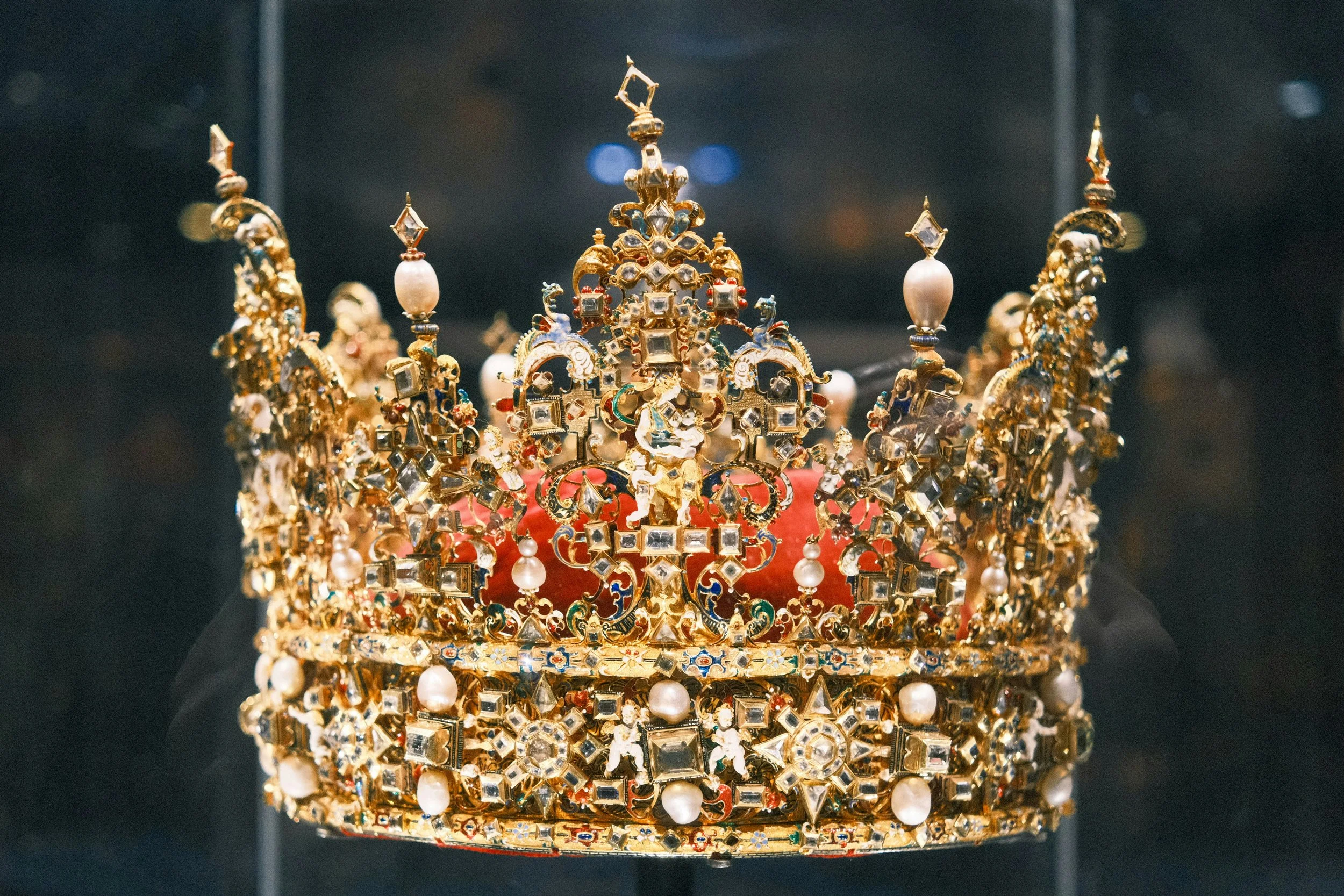
Gold crown on dark background
Photo by Robert Katzki on Unsplash
Jesus as King is probably the hardest part of Jesus’ identity for Americans to understand, much less submit to. The only king we ever had we threw off with a cup of Boston Harbor tea. Ever since, we’ve built our national identity on the concept of self-rule, by the people, for the people, able to swap leaders every four years, potentially handicap their authority every two, and, at least in theory, impeach at any time. Since the only permanent authority we must pay homage to is the electric company, it will be helpful to remind ourselves what a king even does. Or at least we will remind ourselves of what a king was supposed to do. No king but One ever fulfilled the royal law perfectly.
Jesus as King Rules All of Life with Care
What is a king supposed to do? For starters, a king has to defend his area. He must defend what is precious. If other countries come in and take over the area, he isn’t much of a king, is he? Or if his own subjects are constantly in fear of each other, that isn’t a very good king either. He has to make laws that govern behavior such that everyone is able to live in some sort of peace.
But in being able to make laws governing behavior, the king or queen has the ability to define what is normal. For example, did you ever wonder why bride’s dresses are white? It is because one woman in 1840 wore a white dress to her wedding. Her name was Queen Victoria. That is what you call influence! It doesn’t have to be just trendsetting, either. I found a law from the 1400s demanding men’s pointy shoes (popular in fashion at the time) not be too long. To be fair, things were getting out of hand—or foot—in this instance. In case you were wondering, the points couldn’t be over two inches. It was a 100 pound fine to break the law.
We are not used to our rulers having the ability to carry out their wishes in that way, which is why in the West, a kings power was limited by the Magna Carta. It said that even a king is not above the law, keeping him from being able to do whatever he wanted to do.
For the kings in the Old Testament, that principle had been established since Moses’s time. In Deuteronomy 17:14-20, a list of laws was laid down instructing what a future king of Israel should and should not do, establishing from the beginning that the ultimate authority was always God. Even the king had to submit.
So what were the qualifications and regulations of an Israelite king? First, he had to be a son of Abraham (v. 15). They could not install a foreigner to be their king. Remember, the Messiah has to be from Abraham’s line through King David. Once installed as king, the man couldn’t acquire many horses, especially from Egypt (v. 16). This might seem oddly specific, but we must remember that this is Moses writing this. The people weren’t supposed to go back to Egypt. God had already delivered them.
Another thing they couldn’t do was acquire a lot of money and women (v. 17). The job of kingship wasn’t the advancement of the man’s own ends. It was meant to be one that directed the people towards God, including the king! He had to keep his own heart from turning away. That is why he is also commanded to write his own copy of God’s laws and read them (v. 18-19). He had to fear God and keep his own heart from thinking he was above everyone (v. 19-20). If he did these things, his kingdom would last a long time (v. 20). We see the Bible actually refers to kings as shepherds in places like Psalm 78:70–72 “He chose David his servant and took him from the sheepfolds; from following the nursing ewes he brought him to shepherd Jacob his people, Israel his inheritance. With upright heart he shepherded them and guided them with his skillful hand.” Yes, kings were to rule, but notice the expectation of gentle care and guidance that God has in mind for the role.
Now, all of these rules were set before the Israelites even moved into the promised land. It would be a few centuries before any of these laws would be needed, because the people were ruled directly by God during this time. However, once people got into the land and a generation went by without passing on the faith to their children, people forgot about God. They would live any old way that they would want to. God would discipline them, they would repent, God would raise up a man to help lead them back from judgment, called a judge, he would die, and the process would start over.
This was a different way of living than the surrounding countries did, and eventually, the Israelites wanted a king, too. I’m sure the thoughtful people at the time figured that things went well when a human judge was present, so maybe having a permanent king with an heir would help bring stability to their country. A single person would have the authority to defend and define life as they knew it.
What could go wrong?
Well, their very first choice of king was king Saul who wouldn’t obey God during a battle and lost the kingship to God’s choice of David. He promised that David would have a son who would sit on the throne forever. While David certainly wasn’t the ideal king, his son, Solomon, came the closest…until he acquired monies and honeys, and just as predicted, had his heart turned away. The kingship meant to keep the nation together, broke it apart after just 120 years combined. While there were definitely bright spots here and there, the majority of kings in Israel and Judea were disappointing. Even the good kings usually left at least some of God’s commands undone, particularly in the purity of worship that God commanded.
This is why by the time we get to the prophets, we see a scathing review of the kings in Ezekiel 34:1–12. In this, they are compared to shepherds who were supposed to be feeding the sheep rather than eating them! This isn’t the vision of Psalm 78 at all! This is why God promises something amazing in Ezekiel 34:11–12 ““For thus says the Lord God: Behold, I, I myself will search for my sheep and will seek them out. As a shepherd seeks out his flock when he is among his sheep that have been scattered, so will I seek out my sheep, and I will rescue them from all places where they have been scattered on a day of clouds and thick darkness.” At the end of that chapter, God promises to set up a Good Shepherd Ezekiel 34:23–24 “And I will set up over them one shepherd, my servant David, and he shall feed them: he shall feed them and be their shepherd. And I, the Lord, will be their God, and my servant David shall be prince among them. I am the Lord; I have spoken.” Is that not the picture we find in Jesus as the Good Shepherd in John 10:14–16 “I am the good shepherd. I know my own and my own know me, just as the Father knows me and I know the Father; and I lay down my life for the sheep. And I have other sheep that are not of this fold. I must bring them also, and they will listen to my voice. So there will be one flock, one shepherd.”
Jesus fulfills the laws of the kings perfectly. He knew the law and followed it perfectly. He didn’t acquire horses, he had to borrow a donkey! He didn’t acquire silver and gold; he didn’t even have a place to lay his head. He didn’t acquire any women or ever have his heart turned away from anything that wasn’t God’s will. He heart wasn’t lifted above his brothers except onto a cross where he indeed gave up his life for the sheep. He rose again to reign in heaven forever.
Now, you might look around and say, “Well, if this is the world that Jesus is supposedly in control of with all the wars, sickness, and evil, how good of a king could he be?” And this is a real question that we have to wrestle with. And while there are many approaches to answering it, we could look at it this way. If God were to simply destroy all that was evil, he would have to start with me. And you. After all the ways that we have sinned in our lives and how utterly offensive even the smallest of those sins are to God, it really is a wonder that we are still here. We are living in a time where the gospel, the news that our sins and evil can be forgiven, is still going out. We still have time to repent and believe. You still have time to repent and believe. Aren’t you glad Jesus waited at least until now?
Because He won’t wait forever. In Revelation Jesus returns as the King of Kings, Lord of Lords, with His robes soaked in the blood of the wicked. He is a very patient King, but He has told us that He justice will not wait forever.
So surrender now. Kiss the Son, Psalm 2 says. You have been called as a human being to steward, to rule, over the Earth, your home, and your body. And the Christian way to rule over those things is to submit to Another.